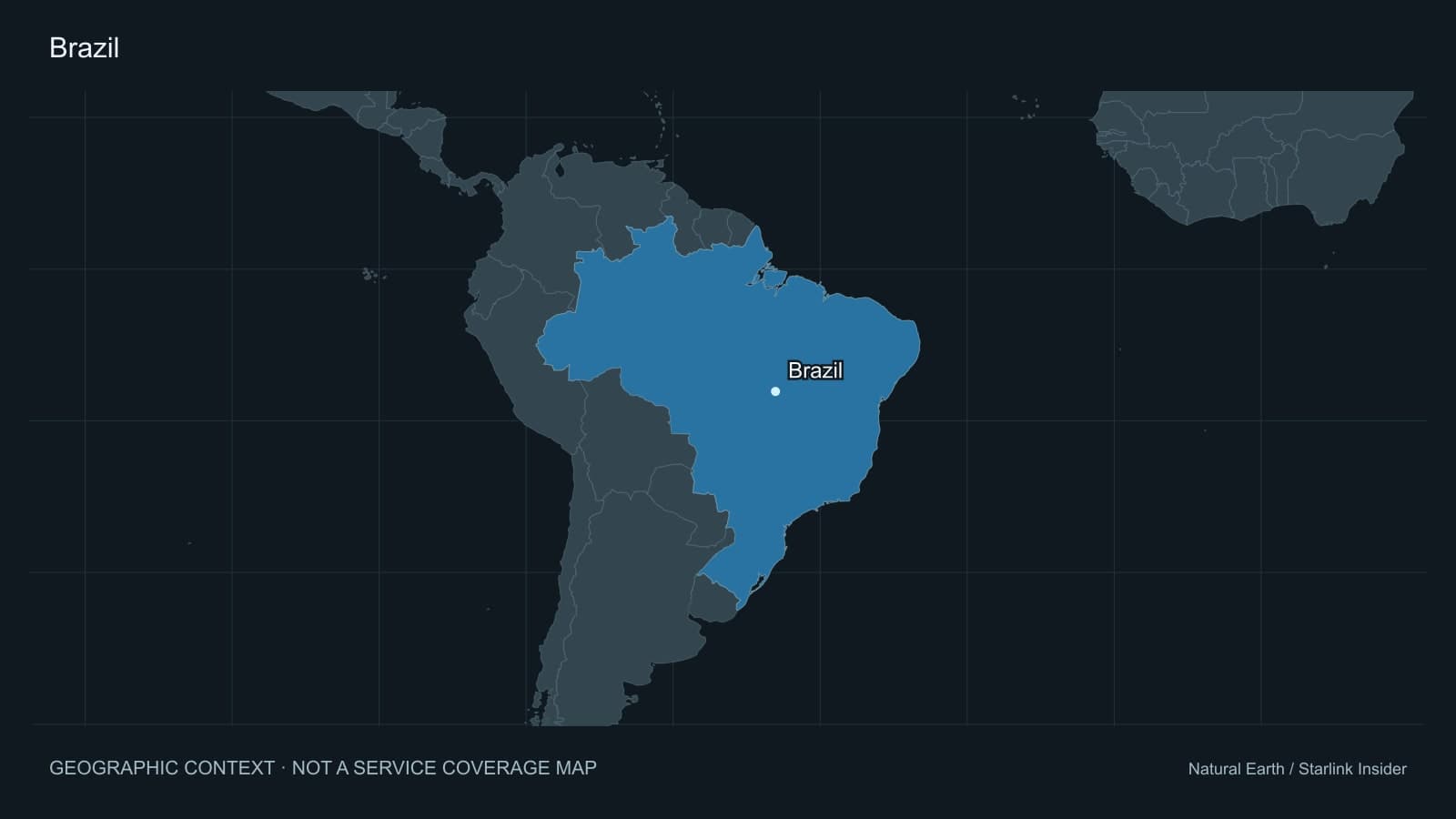
Elon Musk has marked Starlink's Brazilian launch, highlighting a proposed role in connecting rural schools and monitoring the Amazon.
His May 20 statement refers to 19,000 unconnected schools. That is the scope he described for the initiative, not evidence that 19,000 schools already had working terminals that day.
The formal event follows earlier availability emails and initial commercial offers. A February recipient report records a company email, while Money Times' launch coverage says the first packages opened in early May for selected regions.
The newspaper recorded a R$530 monthly charge and R$3,365 for equipment and delivery before taxes. Those are historical opening figures, rather than a quote for a current Brazilian order.
Brazil joins Chile in Starlink's South American footprint. For an isolated site, the satellite link could provide a connection without a last-mile cable reaching the property.
Connecting a school involves more than the dish, however. The terminal needs power and a suitable view of the sky, while the local network has to distribute the connection to the people who will use it.
The size of the proposed school programme makes its eventual deployment important. A launch statement alone doesn't establish its funding, installation schedule or completed connections.